
[ad_1]
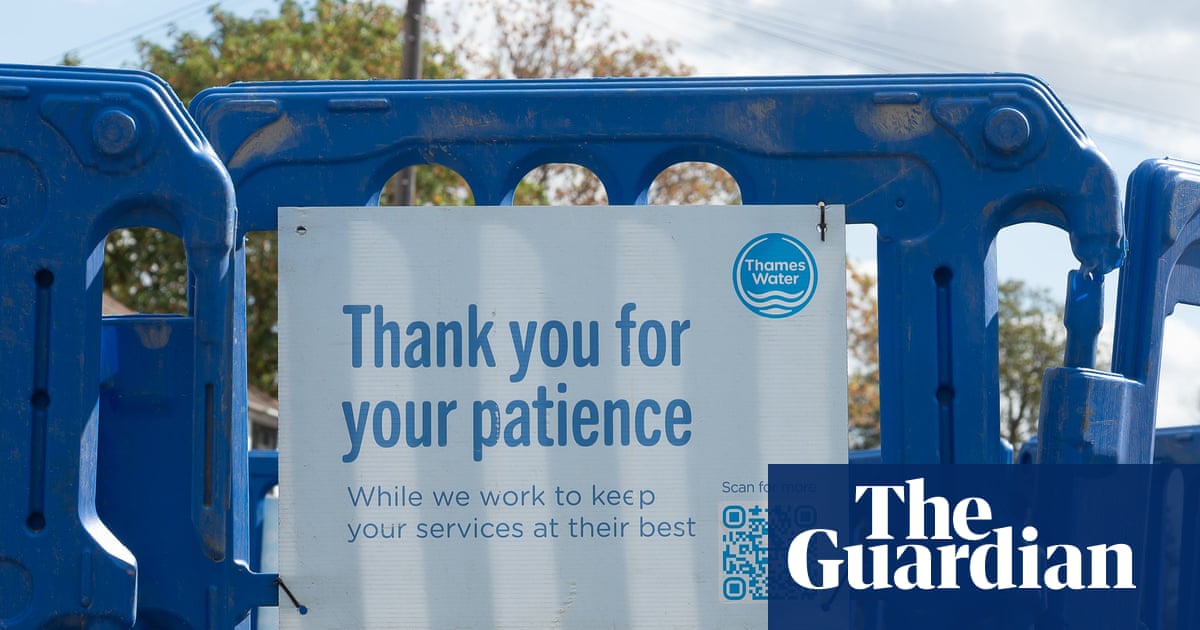
Britainâs insolvency laws cannot deal with the aggressive behaviour shown by the companies that control Thames Water, the environment secretary has said, as she confirmed ministers were prepared to take it into public ownership.
Angela Eagle told the Guardian she was determined to reform the water industry after being told by Andy Burnham to make it her top priority.
But she warned that could mean a change in law to factor in the way in which the US hedge funds that own much of Thames Water have kept it running while seeking a deal to renegotiate its debts.
The battle over Thames looks set to become the first test of the prime ministerâs determination to bring Britainâs utilities into public control even in the face of concerted corporate lobbying and the threat of legal action.
In her first major interview since becoming environment secretary, Eagle said putting Thames Water into special administration â a likely first step to deprivatisation â could prove more complicated than some activists think.
âA lot of people think you can just choose [special administration] ⦠[but] you either are, or you arenât, insolvent. And whatever people think of Thames at the moment, it isnât technically insolvent,â she said.
âThe Water Act didnât really envisage this kind of behaviour and this kind of corporate presence behaving in particular ways.
âBut we have a water bill coming along, and nothing is off the table. Weâve got a legislative vehicle coming along soon to enable us to do what we decide to do.â
Burnham has repeatedly promised to take public utilities into public control, focusing especially on energy and water. He told the Guardian before becoming MP for Makerfield that he intended to nationalise Thames.
The prime ministerâs focus on utilities puts Eagle at the centre of much of what he is trying to do in government, including reforming the water industry and cleaning up illegal dumping sites.
She is taking part in weekly meetings of the National Drought Group, which is coordinating the response to the countryâs fifth drought in three years.
Speaking from Havant Thicket in Hampshire, which is due to be the countryâs first new reservoir since 1992, she said the country had become less resilient under previous governments and she would speed up the pace of new infrastructure.
âThe system has got more clagged up,â she said, comparing the situation with the one she faced as a minister in the governments of Tony Blair and Gordon Brown.
âTrying to get anything done from start to finish is now much slower, much more difficult. It seems to somehow be that people always give you loads of reasons why you canât do anything, rather than [saying] strategically, we need nine reservoirs or this reservoir, or whatever the infrastructure is.â
One of her first tasks will be to decide what to do about Thames Water, which is struggling under a £20bn debt pile and has been given a record £122.7m fine for sewage spills and unlawful shareholder payouts.
after newsletter promotion
Its owners, which include some of the worldâs biggest hedge funds â among them Elliott Management and Apollo Global Management â are seeking a £10bn deal to renegotiate its debt and stave off nationalisation.
Eagleâs predecessor, Emma Reynolds, objected to the deal, warning it would not give taxpayers value for money but the investors are still seeking regulatory approval.
One option is to put the company into special administration, which can be triggered if a company is either insolvent or failing in its legal duties to provide water and sewerage services.
Those calling for such a move argue there are clear signs that the company is failing in this way. But the Guardian revealed last month that senior government officials believe a change in the law might be needed.
Ewan McGaughey, professor of law at Kingâs College London, said: âThe government doesnât need to wait for the creditors of Thames Water to admit they are insolvent, while they charge ever more to billpayers.
âThe law says ministers can take away Thames Waterâs licence for breaching their principal duties, namely to put all sewage through secondary treatment before release, and keep taps and hosepipes running.â
Thamesâs creditors have been contacted for comment.
[ad_2]
Source link













Leave a Reply