
Our maiden campervan trip, 2021, and my wife and I return from Kata Tjuta to Yularaâs âAyers Rockâ campground to find new neighbours. Towering beside our humble rental is a fully optioned monster ute with a spanking new off-road caravan. And a playpen.
Weâre enjoying a sunset dinner outside when a woman lurches down the steps next door cradling a chihuahua. Scowling at us, she drops the dog in the playpen and hauls herself back inside. The dog snarls and yaps until we hastily finish eating and retreat into our tiny van.
They say you canât choose your neighbours. But you can if your house has wheels. We happily roll out next morning.
For any future trips weâre determined not to suffer the major indignity of that one: waking the entire park on a midnight dash to the toilet block via our vanâs thunderous sliding door, blasted by next doorâs motion-detecting floodlights.
So our priority feature in any future camper is a toilet. But what else should be on our list? How do we want to travel? Light? Heavy? Do we really want to keep up with the Joneses and get away from it all but still have everything?
As rank beginners, to find out, we head to the Cranbourne Caravanning & Adventure Leisurefest, an expo of the latest in everything RV. Or not. From its entrance, all we can spot among the hundreds of caravans from 44 manufacturers are off-road models.
âAre there any non-off-road versions?â I ask a salesman. Paul says that any of his local companyâs vans can be ordered up to 30cm lower for âtouringâ. But, he adds, theyâre only popular with older buyers or those with limited mobility. I notice elderly people struggling to get themselves up into the off-roaders. In case they donât make it, a nearby stall sells defibrillators.
âMost people already own four wheel drives, so they buy off-road vans even if they never go off-road,â Paul says wryly. âThe caravan parks are full of them.â
But where to start? A maze of rolling residences stretches out before us, designed for either families or couples, from the tiny âEchidnaâ, a basic 10-footer for solo travel, to a gargantuan 29-foot âfive-star hotel on wheelsâ.
But isnât âluxury adventureâ an oxymoron? Do we really need an electric incinerator toilet â a sewage-processing option that allays a bane of caravanning, the urgent need for an effluent discharge point? Heated and vibrating recliner lounges; a private jet-style positive-pressure air filter system for a âguaranteed dust-free interiorâ? Or nine shades of Italian leather upholstery, American walnut panelling or gold tapware?
We balk at the intimidating vans painted black and khaki with menacing tags â âCounterstrikeâ, âPatriotâ, âConquerorâ and âRebellionââ that convey a military vibe. Their options include full-perimeter CCTV surveillance and lockable gun storage. For feral pig and crocodile country? No thanks.
More family-oriented caravans have extendable porches, for uninterrupted views of the boundless western plains, the magnificent MacDonnell Ranges, or the toilet block at Yulara. An alfresco lifestyle is aided by the refrigerated bar, espresso machine, induction hob and air fryer that magically slide from the flanks of a 26-footer. Curiously, we donât see any bug netting. (After our trip up north, options should include an insecticide pump.) I ask salesman Adrian about the vanâs exterior TV â âfor that moonlight-cinema experienceâ. âWith Starlink, youâve got internet everywhere now, just like home,â he says. âBut Iâm still a bush-TV man, myself.â
But then, isnât gazing into a crackling fire instead of a TV on a quiet night, in a remote place, so last century?
All at sea, we seek advice from prospective customers.
Ben and Deb are looking to upgrade. âSince Ben hurt his back at work our old hybrid vanâs too hard to set up,â says Deb, inspecting a $180,000 off-road behemoth that offers push-button ease for everything that opens and shuts, including a washer-dryer and dishwasher, with self-levelling suspension. âIf we were millionaires weâd buy one of these,â she says.
Jake, Alana and their two bright-eyed daughters just did. The sticker price on their purchase: â$261,995 drive-awayâ. Alana says their existing van is too small for preteen girls who need their own space. Their new mobile mansion has options for a separate entrance and a study nook with USB ports and wifi for remote schooling.
Their parents can enjoy privacy way up front in a king-size bed in the expanding master suite, behind an opulent oak-veneered partition with designer hand basin, outside the sparkling incinerator toilet en suite.
I ask Alana and Jake where theyâll take their impressive new rig. âWe donât know yet,â Jake says, grinning. âAnywhere, I suppose.â The expoâs official blurb is âStart here, go anywhereâ.
I ask if Jakeâs vehicle will haul it. âWeâve got a Ford F-150. I think so.â
Itâs an apt question, as caravans track the automotive obesity trend. Even carbon fibre-clad models can weigh up to six tonnes, and the effect of weight on fuel consumption has always been a factor in caravanning. But especially now.
Salesman Ian reluctantly admits van sales slumped when the US-Israel war on Iran began. âBut now fuel prices have dropped again, things are back to normal,â he says.
I ask him about alternatives to diesel vehicles. âGoing electric isnât viable yet,â Ian says. Though EVs can have equivalent torque to a six or eight-cylinder diesel, theyâre severely range-limited when towing, and charging infrastructure in Australiaâs remote areas is sparse. But he is optimistic. âEven if diesel becomes too expensive, the new battery and hybrid technology looks promising.â
It will need to be. In ideal conditions, towing a large van can see fuel consumption rise well above 20L/100km. Traversing hills or sand, or using low-range gears, uses even more. On arrival, however, the dream of off-grid living is feasible with a new generation of âsmartâ caravans.
Their electric tech is remarkable. Almost all the examples we see have solar panels connected to onboard batteries with up to 20kWh capacity (with 8kW backup generator). These power systems electronically monitor features such as reverse-osmosis pumps, offering an âendlessâ water supply or, alternatively, atmospheric water-scouring devices producing up to 50L a day âfrom thin airâ. Air conditioning is a given. For heating, thereâs onboard diesel units (with carbon monoxide detectors), battery-powered systems offering automatic five-zone comfort, and even under-floor options. There seems to be nothing in the average house that isnât available in one of these uber-vans.
So is there a downside to life on the road? After decades owning a caravan, my wifeâs retired relatives Rob and Sue sold theirs four years ago. The end of Covid lockdowns saw the scene change. There was no more serendipitous travelling. Sites had to be booked well ahead as a flood of new, cashed-up travellers made ghost or double-site reservations. Sue and Rob would arrive at âbooked-outâ parks to find them empty. Popular locations suddenly had five-year waiting lists. Site fees rose. Rob says they economised by using websites offering private lawns and paddocks. Then diesel prices shot up.
âWhen we started vanning weâd live like kings for $1,200 a week,â Rob says. âAfter Covid it cost us almost double that.â For cheap holidays, Sue and Rob now have regular gigs house and pet-sitting interstate.
Australia has among the highest per capita rate of ownership in the world. In 2025, it hit an all-time record, with 938,000 vehicles registered, up 32% from 2019. This suggests there are really two great Australian dreams: owning a home and also having the means to leave it as often as possible.
Like many other modern lifestyles, the RV market and its culture is facing disruption. Despite this, any long weekend still sees millions of Australians flee the city for the bush. Many stay there â that huge cohort of retirees known as grey nomads. Our friends Joanne and David are up north somewhere now, happily uncontactable. The allure is plain: Australia is vast and rugged and beautiful, and relatively safe.
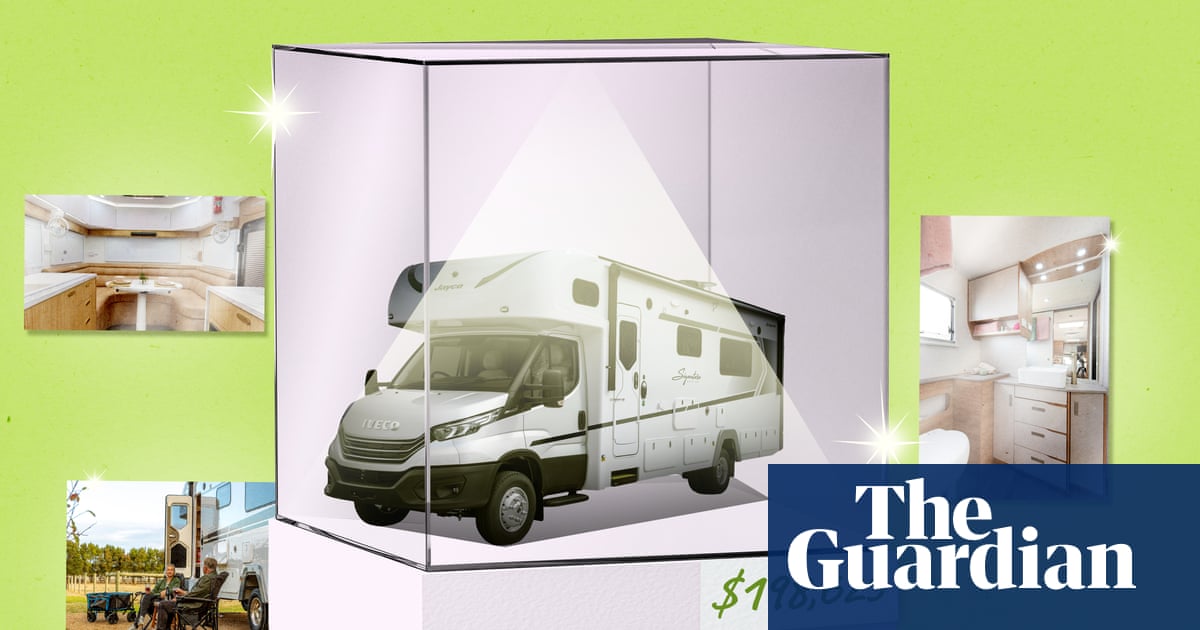
Will we join them? Maybe; but right now weâre only window shopping. Besides, our small car wonât pull any of these monsters. That leaves campervans. We spot one with expanding walls, Tardis-like inside, and more luxurious than our house, for only $198,625. Thereâs a toilet, and my wifeâs other non-negotiable option: 240V outlets for a hair straightener.
My wife is puzzled when I nominate mine: a full-perimeter CCTV surveillance system.
âWhat for? Pigs? Crocs?â
âNo,â I reply. âChihuahuas.â











Leave a Reply