
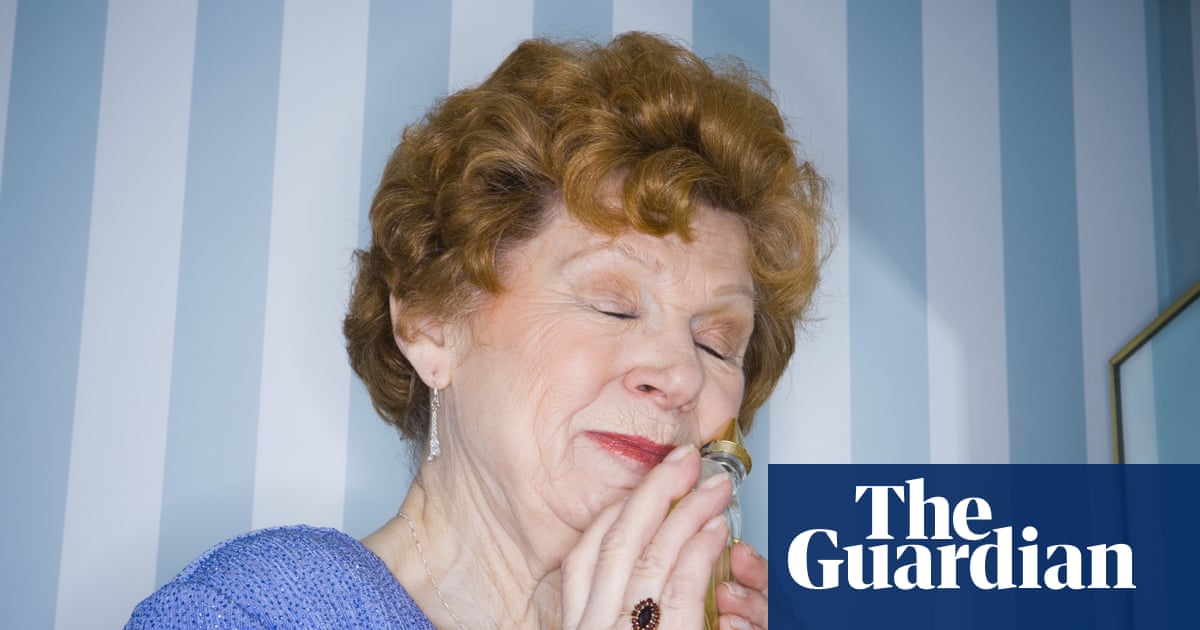
Last week, my mom complained that sheâs starting to smell âlike an old personâ.
She had grabbed her favorite sweater and draped it over herself at the movie theater. âIt smelled like my grandmother,â she said, almost whispering. âI thought someone must have borrowed the jacket. But it was just me.â
My mom, whoâs in her 60s, has a ton of energy. Her hair is thick and still naturally chestnut. Sheâs healthy and strong; she likes to hike and go to rock concerts.
âI donât feel like an old person. Why do I smell like one?â she whined.
I told her, truthfully, that I didnât notice any new aroma. I thought she smelled the same as always: a mix of lotion and gardenia. But I immediately knew what she was talking about.
Experts say that we do smell different as we age. âItâs one of the most universal, least talked-about parts of being human,â says Dr Roya Javid, a dermatologist in Monterey, California. âItâs just biology, unfolding on schedule, the same way we grow taller, then our hair goes gray. Every single person on the planet goes through these same transitions.â
What causes us to smell different as we age?
The musty odor that people sometimes call âold person smellâ comes from a chemical compound called 2-nonenal. 2-nonenal is produced when certain skin oils oxidize and break down, says Javid.
Itâs a normal â and unavoidable â change.
âOur skin is coated in a thin layer of natural oils called skin lipids. They keep skin soft, waterproof and protected,â she says. Those lipids are made up of fatty acids, and as we age, the fatty acids change in composition. At the same time, the skinâs ability to fight off every day wear-and-tear slows down. The oils are more exposed, and when they break down through oxidation, they release 2-nonenal.
âItâs just a natural byproduct of skin ageing â not dirt, not poor hygiene,â Javid says. âItâs just oil quietly changing over time, the same way metal changes when itâs exposed to air.â
Levels of 2-nonenal vary by person. âWe donât yet know why some develop a stronger scent than others,â says Javid. âThough an individualâs skin-oil composition, genetics, the skinâs microbiome, hygiene practices, clothing, health and environment may all play a role in both how much 2-nonenal is produced and how much stays on the skin throughout the day.â
When does this change occur?
Experts say âold person smellâ can show up much earlier than you might expect.
A Japanese study from 2001 tested the skin of subjects between the ages of 26 and 75, and detected 2-nonenal starting at age 40. But Dr Arshad Rather, consultant geriatrician and general physician at Medical Express Clinic in London, says this doesnât mean people wake up with a noticeable new odor.
âResearch suggests 2-nonenal increases gradually the older you get, particularly past middle age. Itâs not a switch flipping at 40 â more a dial slowly turning up,â says Rather.
Experts note that developing an age-specific odor isnât unique to older adults. In fact, every age group has associated smells, for better or worse.
âEvery stage of life has its own signature scent,â says Javid. âBabies smell sweet and milky because their scent glands havenât switched on yet. Puberty flips that switch, and suddenly hormones drive a stronger, muskier smell for teens. Adulthood has a more consistent scent tied to sweat and daily life. And [these] changes in the skinâs natural oils give people a different scent later on.â
Is âold person smellâ inherently bad?
Any negative feelings people have toward âold person smellâ are really a perception problem, not a reality problem, Javid says.
after newsletter promotion
A blind test found that the 2-nonenal scent may not be disagreeable. In one 2012 study, researchers asked 41 young adults to smell T-shirts worn by individuals from three age groups: young (20â30 years old), middle-age (45â55) and old age (75â95). The researchers found that the odor from older adults was ârated as less intense and less unpleasantâ than other groups.
Dr Johan N Lundström, a professor of psychology at Karolinska Institutet in Sweden and one of the authors of the study, says his team was surprised by the results. They hypothesized that smell would follow a linear trend, with the youngest group being rated highest and the oldest group rated the lowest, but that wasnât the case.
âThe elderly have a clearly separate body odor quality, but it was not rated as being all that negative,â Dr Lundström says.
Can you do anything about the odor?
Experts say thereâs no way to stop 2-nonenal from developing. But there are some ways to manage the odor.
Javid says regular bathing can wash away some of the scent. However, soap and water wonât fully remove the chemical, because it doesnât simply sit on the surface of the skin like sweat â rather, itâs being generated continuously. Deodorants might temporarily cover up a smell, but wonât remove 2-nonenal.
Meanwhile, regularly washing clothes, sheets and airing out rooms can help reduce the odor in the home. But because 2-nonenal wonât easily wash out, it can linger even after the most dedicated cleaning practices.
Some body wash products are marketed as neutralizing 2-nonenal, such as soap made with persimmon. Experts say while there are some anecdotal accounts that these help, scientific evidence is lacking.
Rather suspects thereâs a connection between 2-nonenal production and a personâs lifestyle and diet, but says more studies are needed. âSince the smell comes from an oxidation reaction, reducing oxidative stress is a sensible target. Eating antioxidant-rich foods, such as colourful fruit and vegetables and sources of vitamins C and E, can reduce oxidative stress,â he says.
âNot smoking and protecting your skin from sun damage are sensible anti-oxidation habits too,â adds Rather.
In the end, experts say itâs true that people develop a different smell as they age, but itâs nothing to be embarrassed about.
If a person starts to notice they smell like 2-nonenal â which we all will â Javid urges them to not feel self-conscious or spend a fortune on special soaps.
âFocus on the things that support your skin generally: antioxidants, less sun damage, less smoking, good hydration,â she says. âAnd know that the science says youâre worrying about something that, objectively, isnât as bad as the stereotype.â













Leave a Reply