
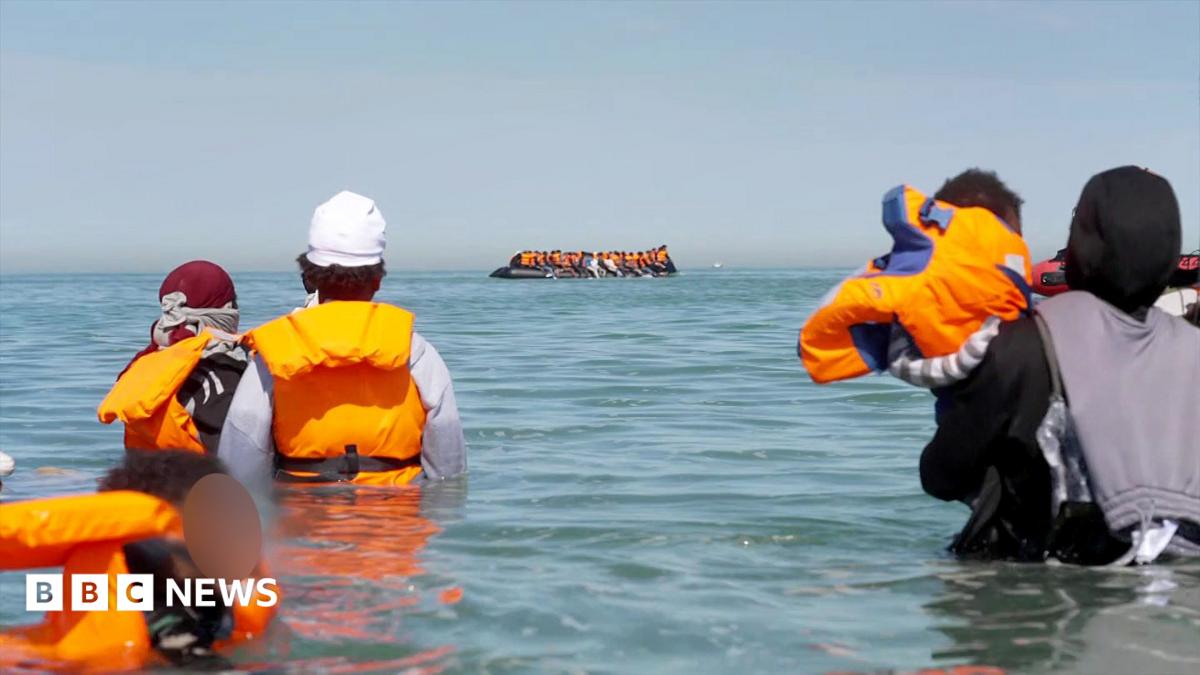
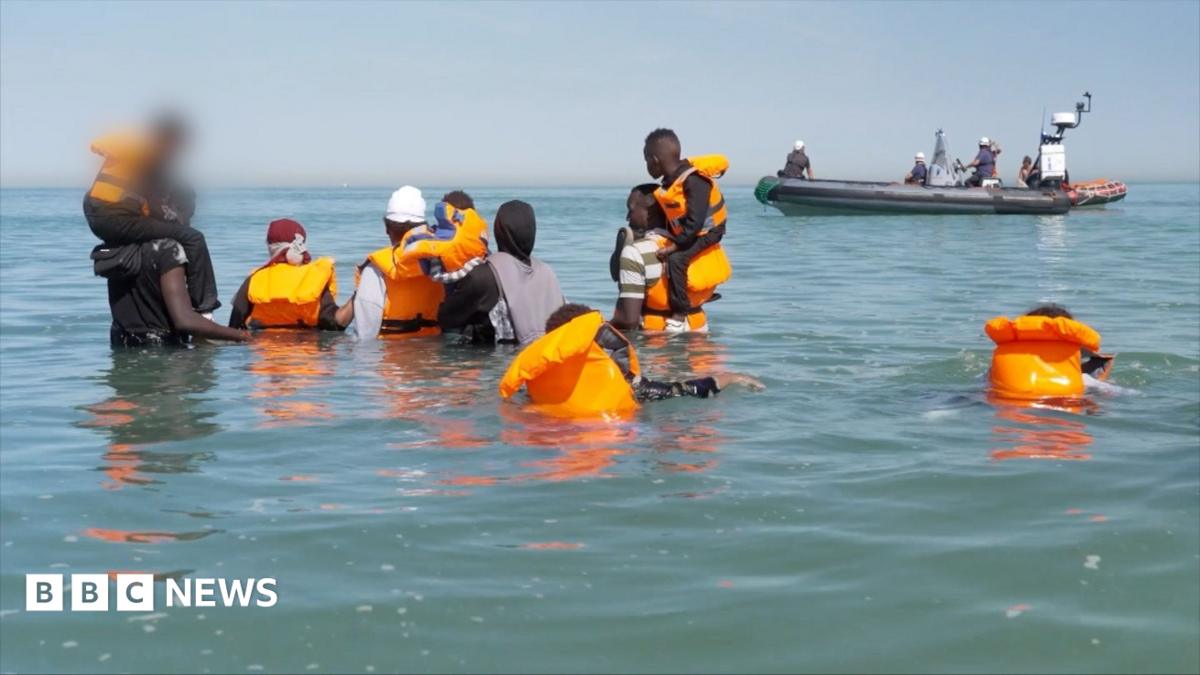
What they leave behind in Gravelines is a scene of dejection and exhaustion. A limp toddler is carried past me towards a police officer, who revives him with a light shake.
This all unfolds next to four or so men casting their fishing rods into the increasingly choppy waters. It is peak holiday season here. They and other dogwalkers barely glance at the crestfallen migrants wading back to the stand.
Before, the gangs would often launch boats in the dead of night, but with increased police patrols, charity workers tell us the gangs now see the middle of the day as a better opportunity, as it takes taxi boats longer to arrive and it allows them to better co-ordinate boarding.
“You feel guilty being there – going to the beach and having a good time, while these families are in such terrible situations,” observes a woman with her young daughter. They had been playing with a bucket and spade.
“It’s hard,” she admits. “We regularly see people on the beach attempting the crossing. It feels like living in two parallel worlds that have nothing to do with each other; it’s really strange.”
The migrants remaining will wait for their next opportunity, as per their agreement with the gangs. But because of more robust policing that wait is now typically weeks, even months, rather than days.
They also need a favourable weather window: the wind needs to ideally be under 5 knots and waves need to be less than 0.8m for a small boat to have a chance of making it across.
To improve their chances of avoiding detection and to be closer to a taxi boat, charity workers tell us migrants are also sleeping closer to the beach in the woods or among the dunes, instead of at the larger camps where they can wash, or receive food, water and medication.
It is after arriving at the largest settlement at Loon-Plage, near Dunkirk, that we soon find ourselves in direct confrontation with the people smugglers.
As the intense heat bears down on a tent where people can charge their devices, we initially meet two young Egyptian men who are visibly tired and disheartened. They have been staying in squalid conditions for months and have made several unsuccessful attempts to cross.
“The police stopped us from leaving and destroyed the boats,” explains one. He says he wants to go to the UK so he can work and obtain legal papers.
A young Sudanese woman and Afghan man also told us they had also tried to cross dozens of times. We have been to the camp on several occasions over the past year, but this time there was a perceptible unease.
Riot police had cleared out the tents in the same week, and the day before around 400 migrants preparing for a taxi boat in the nearby Hardelot forest were forced to return after several fires broke out.
It is evident the migrants and the gangs have been repeatedly frustrated, and the sight of our camera in one corner of the camp leads to us being attacked.
After agreeing to stop filming, one smuggler, around 5’8″ tall (172cm) and in a new grey tracksuit, tries to grab our camera. He then repeatedly throws rocks at us from close range, striking our cameraman above the eye.





Leave a Reply