
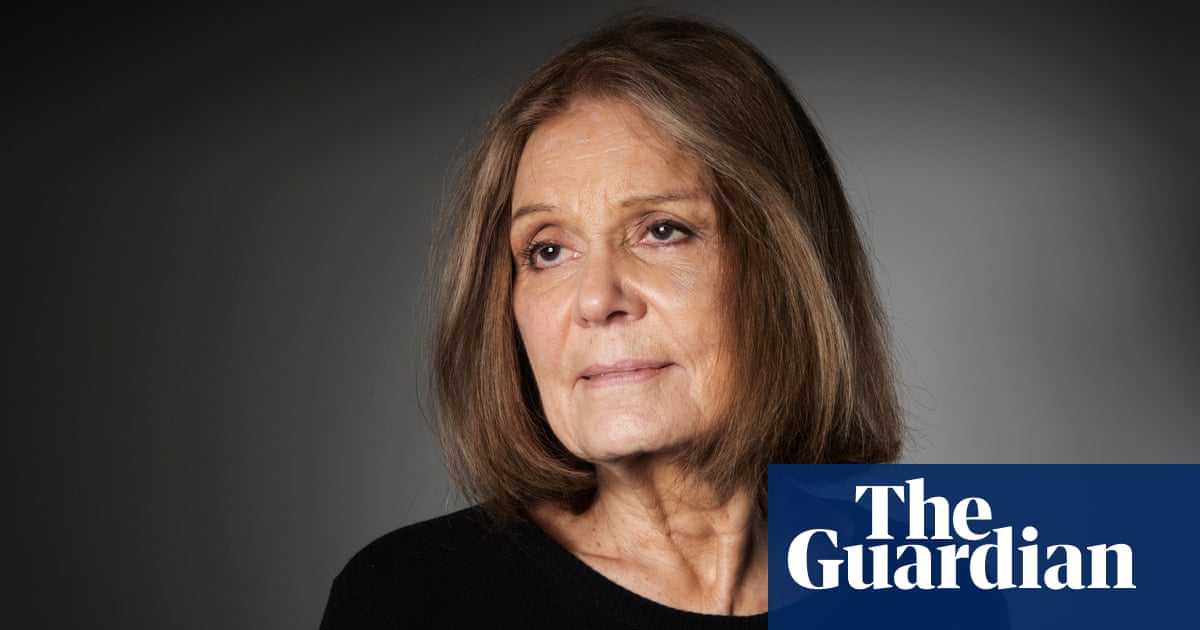
Gloria Steinem, the American feminist and journalist whose activism helped push through greater rights for women around the world has died, aged 92.
Steinem “passed away peacefully at her home in New York City, surrounded by some of the many who loved her”, a statement shared to her Instagram page said.
“Gloria’s near-century on earth were years well-lived, and she continued working for equality until the very end,” the post added. “Gloria’s greatest gift was her ability to listen to others, to make others feel seen and heard. Her words, actions, and example gave people permission to be their truest selves.”
Steinem brought a feminist perspective into the mainstream through rigorous journalism, public speaking and activism. The author of nine books, she campaigned against domestic violence, female genital mutilation, the pornography industry and the Vietnam and Gulf wars. She also worked in support of causes including Black Lives Matter, the reunification of Korea, female reproductive rights, LGBTQ+ rights and the Times Up movement. In 1984, she was arrested while protesting against apartheid outside the South African embassy in Washington DC.
Outside Steinem’s elegant, classic townhouse in Manhattan’s Upper East Side neighbourhood on Thursday morning, passersby left tributes.
Debbie Goldberg, who said she lived close by, placed a bunch of red flowers next to the steps up to the front door.
“I’ve never done that before. But she deserved it,” she said, describing Steinem as one of the most influential people for women’s rights and human rights in history.
“She’s a hero to all women whether they know it or not,” she said.
Goldberg said that she saw Steinem speak in Washington DC “around 30 years ago”, and then bumped into her as they were both heading into a cinema a few blocks away to see the Barbie movie in 2023. Goldberg said had been planning to watch Steinem speak in a few weeks’ time at a YMCA close by. “She’s always been an idol of mine,” Goldberg added.
Others left a bouquet of roses mixed with a variety of blooms in pink and white, and a large seashell filled with gems and other trinkets.
Born in Ohio in 1934, Steinem grew up in a trailer home. Her mother’s mental illness left her struggling to hold on to work and in and out of sanatoriums. When she was 10, her parents separated and, while growing up in a rundown home in Toledo with her mother, Steinem began to notice the hostility her mother endured as a working woman.
After graduating from a women’s liberal arts college in 1956, Steinem travelled to India for two years, where she worked as a legal clerk in the country’s supreme court. Returning to the US, she worked as the director of the Independent Research Service, a CIA front that recruited American students to disrupt the Soviet-controlled World Youth Festivals in Vienna and Helsinki. Steinem later revealed she had always known who was bankrolling the operation: “If I had a choice I would do it again.”
In 1962, she received her first “serious assignment” in journalism from the Esquire magazine editor, Clay Felker. Her feature on contraception, The Moral Disarmament of Betty Coed, detailed how women were forced to choose between careers and family. The following year, Steinem went undercover as a Playboy Bunny for 11 days, to write her infamous, two-part exposé of how the glamour models were treated while working in Hugh Hefner’s Playboy Club. Forced into tight costumes and high heels, Steinem lost 10lb – half of them in a single night – during her stint; her manager celebrated by making her costume two inches tighter. Following the article, she was unable to get work because “because I had now become a Bunny – and it didn’t matter why”.
In 1968, Felker hired her to work at New York magazine, in which she would coin the term “reproductive freedom” for an article about an abortion “speakout” in Greenwich Village. Having had an abortion in London when was 22, she later described feeling a “big click” while at the protest and said the day marked the start of her life as an “active feminist”.
“I think the person who said: ‘Honey, if men could get pregnant, abortion would be a sacrament’ was right,” she told the Observer in 2011. “Speaking for myself, I knew it was the first time I had taken responsibility for my own life. I wasn’t going to let things happen to me. I was going to direct my life, and therefore it felt positive.”
She also credited black feminists including Florynce Kennedy, Evelyn Cunningham, Shirley Chisholm and Fannie Lou Hamer for teaching her the importance of activism. “It was like finding a family,” she said of that time. “As wildly different as we may be, and we certainly were, women share hopes and a certain vision of the world, and a certain shit detector.”
This also began Steinem’s career as a provocative journalist, penning articles including If Men Could Menstruate, which ran in Ms, a magazine co-founded by Steinem and Dorothy Pitman Hughes in 1971. The first issue featured Wonder Woman on the cover; the superhero had recently given up her powers to stay with her male love interest, and the essay argued that DC Comics should restore her powers and return the character to her feminist roots. Steinem also wrote articles such as What It Would Be Like If Women Win in Time, and After Black Power, Women’s Liberation, the 1969 New York magazine article that would make her name as a feminist leader.
Terrified of public speaking and conflict, but media savvy, Steinem used the platform she gained as a white, educated woman to speak out for those traditionally ignored – black people, ethnic minorities and the working class. Sex and race were always intertwined, she argued in 1971, “because they are easy, and visible differences have been the primary ways of organising human beings into superior and inferior groups and into the cheap labour on which this system still depends.” In 2017, she said: “It doesn’t surprise me that the most virulent anti-abortion measures are coming from Alabama and other southern states because racism and sexism are always intertwined. You can’t perpetuate racism without controlling women and reproduction.”
Steinem was also a polarising figure. Some feminists felt her position as a public leader in the movement had been decided not by merit but by the media, which chose her for being young, white and attractive; in her 2015 book My Life on the Road, she wrote that the “idea that whatever I had accomplished was all about looks would remain a biased and hurtful accusation even into my old age”.
She was roundly criticised for decades for a 1998 opinion piece for the New York Times, in which she supported President Bill Clinton in the face of sexual harassment allegations. “He is not guilty of sexual harassment,” she wrote, only “a gross, dumb, and reckless pass at a supporter during a low point in her life”. In 2017, she said: “We have to believe women. I wouldn’t write the same thing now because there’s probably more known about other women now.” She was also regarded as hostile to transgender rights because of a piece she wrote in 1977, a position she clarified in 2013: “I believe that transgender people, including those who have transitioned, are living out real, authentic lives. Those lives should be celebrated, not questioned.”
In 1986, Steinem was diagnosed with breast cancer, then in 1994 the chronic pain condition trigeminal neuralgia. After years of dismissing marriage, she married the environmental activist David Bale in 2000, and remained close with her stepson, the actor Christian Bale, after his father’s death in 2003.
Having supported Hillary Clinton’s presidential campaign, Steinem was a prominent critic of Donald Trump, co-chairing and speaking at the Women’s March on Washington, a mass protest held the day after the Trump’s inauguration in January 2017. “The only good news of Trump is that the galvanising of activism is like nothing I have ever seen in my life,” she told the Guardian that year. “A thousand times more even than the Vietnam war, and how important that was – or of any other thing I’ve ever seen.”
In 2011, she told the Observer: “I hope to live to 100. There is so much to do.”
Anna Betts contributed reporting from New York






Leave a Reply