
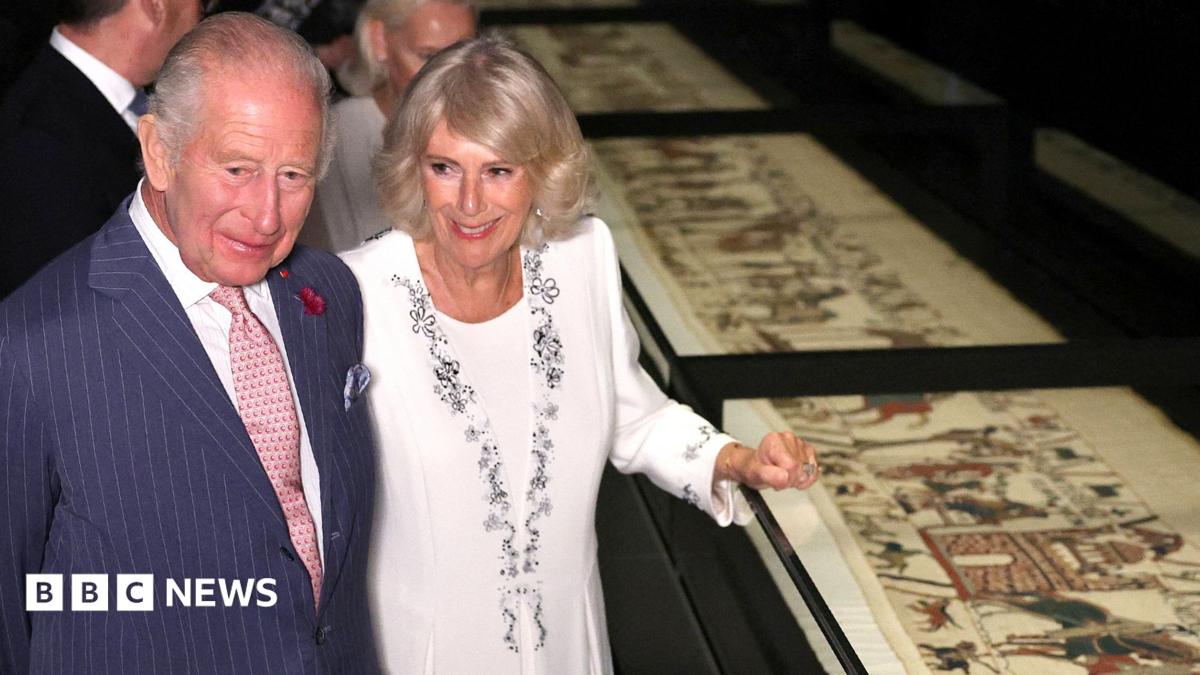
The King and Queen, Macron and his wife Brigitte, and Burnham and his wife Marie-France van Heel were given the chance to see the historic embroidery in the atmospheric darkness of the British Museum.
It’s displayed in a long glass illuminated cabinet, with the figures remarkably vivid for something almost a 1,000 years old, and visitors file along, following the story of the Norman invasion.
The royal visitors had a close look at key scenes in the tapestry, including the Coronation of King Harold and his death in battle.
It’s filled with details of medieval life and the King commented on Normans pulling a cart with “an enormous amount of wine”.
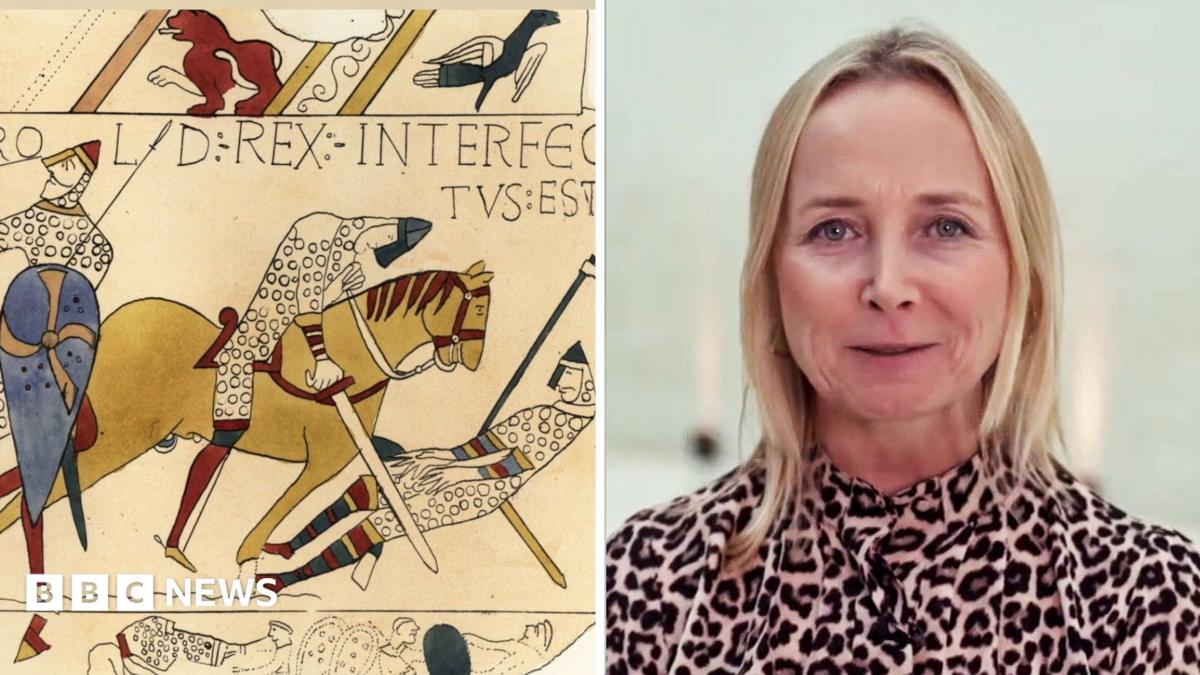
Culture Secretary Lisa Nandy said the final scene, showing King Harold with an arrow in his eye, was what she found the most dramatic.
“We’ve just been talking to all the schoolchildren, and that’s the bit that they really liked and really registered with them,” she said.
“And it’s amazing actually that a tapestry that is 1,000 years old can still inspire people to feel such emotion and capture such drama after all this time.”
Nandy said she was inspired by the way this epic depiction of conflict had “come to symbolise probably the biggest act of friendship on behalf of the French nation”.
Sending the tapestry to the British Museum was announced by Macron during a state visit to the UK in July 2025, as an emblem of the strong partnership between the countries.
There had been fears that moving the fragile tapestry could risk causing damage, but French government sources said display conditions at the British Museum were “ideal”.
The French authorities welcomed the way that visitors in London would see the tapestry lying flat, rather than upright, with this believed to be better for the conservation of the fibres.
It also allows viewers to get a clearer view of all the animals, plants and often bawdy images sewn around the margins of the main narrative.
It is believed the final scenes of the tapestry have been lost or destroyed, as it has not always had such careful owners. In the 18th Century, during the French Revolution, it was rescued from being cut up to make covers for soldiers’ carts.












Leave a Reply