
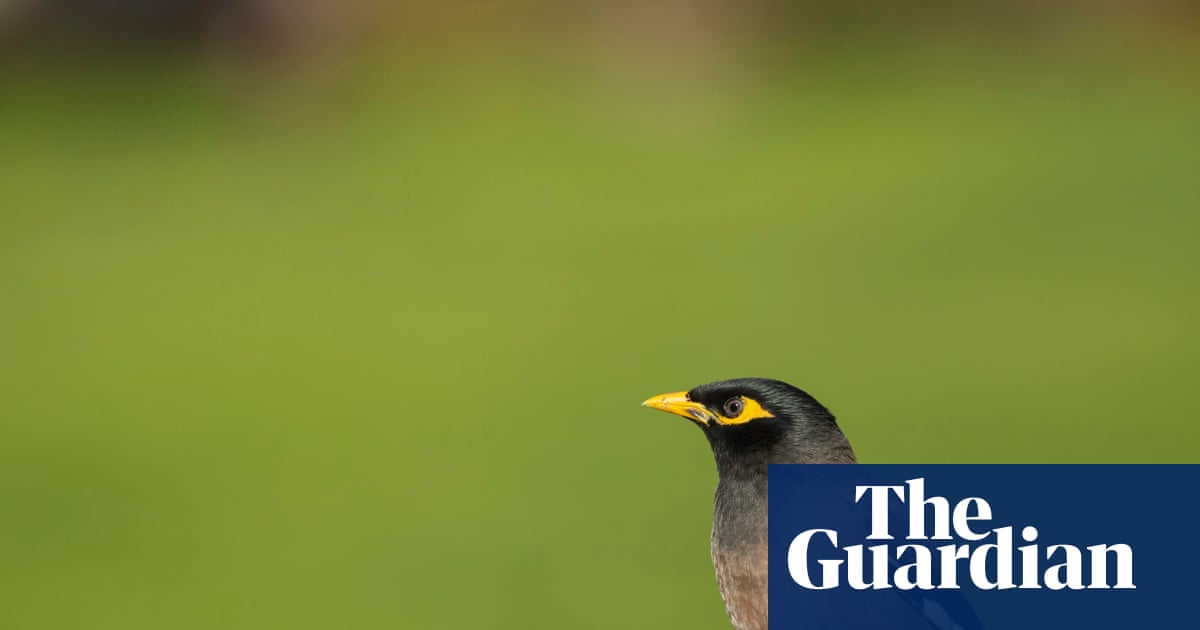
A viral video of common myna birds appearing to calmly ride a Sydney train in place of winged flight has shocked social media users. But not experts, who say it makes perfect sense that avian life has adapted to routinely navigate public transport.
Bird life is ubiquitous in Australiaâs urban landscapes. They appear in our shopping centres, our workplaces, our homes. To witness a feathered friend on a train isnât exceptional.
But ABC producer Jackie Dent was surprised to hear, when encountering a pair of myna birds on Sydneyâs inner-city North Shore line last month, that they were apparently regular commuters. The duo were casually perched atop a seat together, well behaved and unmoving.
Allow Instagram content?
This article includes content provided by Instagram. We ask for your permission before anything is loaded, as they may be using cookies and other technologies. To view this content, click ‘Allow and continue’.
Dent hopped on at Roseville station and observed the birds âvery relaxed and at homeâ.
âI got off at Chatswood to change trains and spoke to a lovely train guard to raise the alert that two birds were stuck on the train,â she wrote on social media alongside a video of the duo.
To her surprise, the guard responded that they âalwaysâ caught the train, jumping on and off between Lindfield and Artarmon â supposedly to scrounge for food.
Her post quickly went viral and the comment section blew up, with others sharing stories of birds theyâd witnessed exhibiting the same behaviour.
âIâd always watch them when I caught the train to Lindfield in my uni days! They know exactly where they are going,â one user wrote of myna birds.
BirdLife Australia senior advisor, Sean Dooley said it was âunusualâ for birds to fly onto trains but not âunexpectedâ.
âThe common myna is a highly intelligent bird,â he said. âIt does seem very likely that it is the same birds riding the same train ⦠to take advantage of food resources along the line.â
Common mynaâs are monogamous and territorial, so the duo are likely a couple. But Dooley said the habit could also spread to other mynas, as they shared behaviour.
âTheyâve learned to exploit all sorts of food resources from us, and theyâre particularly good at feeding on the waste that we have, whether itâs in bins or stuff thatâs strewn around,â he said. âClearly theyâve worked out that thereâs a veritable smorgasbord along the Northern line.â
Andrea Griffin, an associate professor in wildlife conservation at the University of Newcastle, said the video âdoesnât surprise me at allâ as mynas are âincredibly accustomedâ to living around humans, dating back to ancient Egypt.
Theyâre also âincredibly good learnersâ â mynas can mimic speech if kept by humans, have good memories and know how to navigate home from large distances.
âI would say itâs the same birds [getting on and off the train],â she said. âI suspect that a few birds have learned to do this. Mynas are quite loyal to their foraging areas so those birds would predictably be on that platform every day around the same time.â
As to what prompted them to make the leap onto an approaching train, Griffin echoed Dooleyâs suspicion that it was food-driven.
âTheyâre not trying to go somewhere,â she said. âTheyâre not going out for a joyride.
âAll you need, basically, is to have a bird where the door opens and thereâs some food at the entry and they hop on. And then they learn, âoh, this is quite a good foraging ground. I might do thisâ.â












Leave a Reply